That '10% of Your Brain' Claim Is Over 100 Years Old — And It Started With a Misunderstood Psychology Study
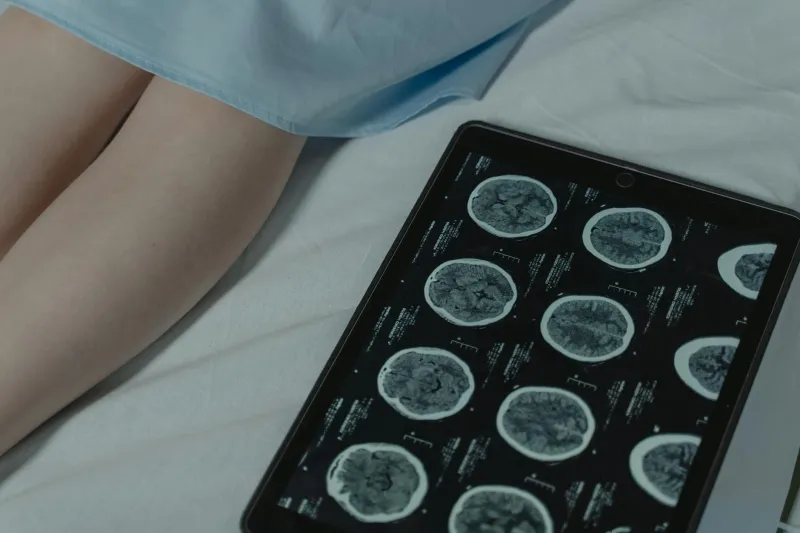
Walk into any bookstore's self-help section, and you'll find dozens of titles promising to help you "unlock your brain's hidden potential" or "tap into the 90% you're not using." The premise is always the same: humans only use 10% of their brains, leaving a vast reservoir of untapped mental power just waiting to be accessed.
It's a compelling idea that's appeared in everything from the movie "Lucy" to countless motivational seminars. There's just one problem: it's completely false. And the real story of how this myth took hold reveals something fascinating about how scientific misunderstandings can snowball into cultural "facts."
The Trail Goes Cold in Early Psychology Labs
Pinning down exactly where the 10% claim originated is like trying to trace the source of an urban legend. Neuroscientists have been debunking it for decades, but the myth's roots seem to stretch back to the early 1900s, when our understanding of the brain was still in its infancy.
The most commonly cited origin points to William James, a pioneering American psychologist who wrote in 1906 that "we are making use of only a small part of our possible mental and physical resources." But James never mentioned 10% — that specific number appears to have been added later by people who misremembered or misquoted his work.
Another theory traces the myth to early neurosurgery experiments. In the 1930s, neurosurgeon Wilder Penfield discovered that stimulating certain brain areas with electrodes didn't produce obvious responses in patients. Some interpreted this to mean those areas were "unused," but Penfield himself never made such claims. He understood that just because an area doesn't respond to direct stimulation doesn't mean it's inactive.
When Brain Imaging Showed the Real Picture
Modern brain imaging technology has completely demolished the 10% myth. PET scans, MRIs, and other imaging techniques show that we use virtually all of our brain, even during simple tasks.
"Even during sleep, areas of the brain show significant activity," explains Dr. John Henley, a neurologist at the Mayo Clinic. "The idea that 90% of the brain sits idle is like saying 90% of the muscles in an Olympic sprinter's legs aren't working during a race."
Brain scans reveal that even basic activities like reading this article activate multiple brain regions simultaneously. Your visual cortex processes the words, your language centers interpret meaning, your memory systems connect new information to existing knowledge, and your motor cortex maintains your posture — all while your brain stem keeps your heart beating and lungs breathing.
Damage to supposedly "unused" brain areas often results in severe impairments. If 90% of the brain were truly dormant, strokes and head injuries would be far less devastating than they actually are.
Hollywood's Role in Keeping the Myth Alive
While scientists have consistently debunked the 10% claim, Hollywood has embraced it as a convenient plot device. Movies like "Limitless" and "Lucy" built entire storylines around characters who suddenly gain access to their "unused" brain capacity.
These films tap into something deeply appealing: the idea that we all have hidden potential just waiting to be unlocked. It's the neurological equivalent of finding out you've been sitting on a winning lottery ticket your whole life.
The entertainment industry isn't entirely to blame, though. The myth predates modern cinema by decades and has found new life in everything from internet memes to TED talk titles.
Why Self-Help Culture Can't Let Go
The 10% brain myth persists because it serves a psychological need. It offers hope that our current limitations aren't permanent — that there's a vast reservoir of untapped ability just waiting for the right technique, supplement, or mindset shift to unlock it.
This appeals especially to American culture's emphasis on self-improvement and unlimited potential. The myth suggests that anyone can become a genius, develop psychic powers, or achieve superhuman performance if they just learn to access their "unused" brain power.
Self-help authors have built entire careers around this premise, selling courses and books that promise to help people "activate" dormant brain regions. The fact that neuroscience has thoroughly debunked the underlying claim doesn't seem to matter — the myth is too useful to abandon.
What Your Brain Is Actually Doing
The reality is far more impressive than the myth. Your brain, which weighs about three pounds, consumes roughly 20% of your body's total energy despite being only 2% of your body weight. This massive energy consumption happens because your brain is constantly active.
Even when you think you're doing "nothing," your brain's default mode network is running background processes — consolidating memories, making connections between ideas, and maintaining your sense of self. It's like a computer that never truly shuts down, always running essential background programs.
The brain's efficiency comes not from using more regions, but from optimizing connections between neurons and coordinating different areas more effectively. Learning a new skill doesn't "activate" previously unused brain areas — it strengthens existing neural pathways and creates new connections between regions that were already functioning.
The Real Story Behind Human Potential
While we don't have 90% of unused brain capacity waiting to be unlocked, human potential isn't limited by our current performance. The brain's neuroplasticity — its ability to reorganize and form new connections throughout life — means we can genuinely improve our capabilities through practice, learning, and experience.
The difference is that this improvement comes through hard work and gradual development, not by flipping a switch to access hidden brain power. It's less dramatic than Hollywood would have us believe, but it's real and achievable.
The next time someone tells you we only use 10% of our brains, you can set the record straight. We're already using nearly all of it — and that's actually the more amazing story.