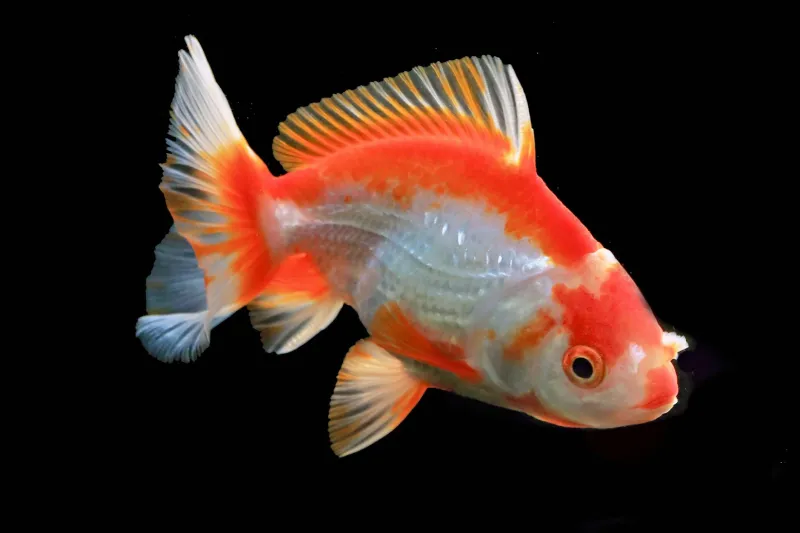
The Three-Second Myth Everyone Knows
Walk into any pet store, and you'll hear someone mention that goldfish have a three-second memory span. It's become such accepted wisdom that people use it as a metaphor for forgetfulness. Parents tell kids not to worry about their pet's bowl because "the fish won't remember anyway." But this widely repeated fact is completely wrong.
Scientific studies have proven that goldfish can remember things for weeks and even months. They can recognize human faces, learn to navigate mazes, and respond to different colors and sounds. Some goldfish have been trained to play soccer, distinguish between classical music composers, and even perform tricks on command.
What Science Actually Shows About Fish Memory
Researchers at Plymouth University conducted controlled experiments where goldfish learned to navigate complex mazes. The fish remembered the correct path for weeks after initial training. Other studies showed goldfish could distinguish between different people and would swim excitedly toward their regular caretaker while ignoring strangers.
Dr. Culum Brown, a fish cognition expert at Macquarie University, has documented goldfish learning feeding schedules down to specific times of day. His research shows they anticipate meal times and gather at feeding spots before food arrives — behavior that requires memory lasting far longer than three seconds.
Perhaps most impressively, goldfish demonstrate what scientists call "time-place learning." They remember not just where something happened, but when it happened, creating complex mental maps of their environment that persist for months.
Where the Three-Second Story Started
The origin of the three-second claim is surprisingly hard to trace. Unlike many scientific misconceptions, it doesn't appear to stem from misinterpreted research or outdated studies. Instead, it seems to have emerged from general assumptions about "simple" animals having "simple" minds.
Some researchers suggest the myth gained traction because it made people feel better about keeping fish in small bowls. If goldfish couldn't remember their surroundings anyway, the reasoning went, then cramped living conditions weren't really a problem. The pet industry had little incentive to correct a belief that made their products seem more humane.
The three-second timeframe might have originated from observing fish swimming in repetitive patterns, which people interpreted as constant rediscovery of their environment. In reality, this behavior often indicates stress from inadequate habitat conditions — the fish equivalent of pacing in a cage.
Why We Keep Believing It
The goldfish memory myth persists because it fits our assumptions about animal intelligence. We tend to rank animals in a simple hierarchy, with mammals at the top and fish near the bottom. This creates confirmation bias where we readily accept information that supports our preconceptions.
The myth also serves a psychological function. It absolves us of responsibility for animal welfare. If goldfish can't remember being in a tiny bowl, then keeping them in tiny bowls isn't cruel. It's a convenient belief that requires no behavior change.
Media repetition has cemented the three-second claim in popular culture. Cartoons, movies, and comedy routines use goldfish forgetfulness as a punchline, reinforcing the myth through entertainment rather than education.
What This Reveals About Animal Intelligence
The goldfish memory revelation is part of a broader scientific awakening about animal cognition. Fish, once considered barely conscious, are now known to use tools, form social relationships, and even show cultural learning where behaviors pass between generations.
Cichlids recognize their offspring individually among hundreds of fry. Cleaner wrasse pass the mirror self-recognition test that was once thought to prove self-awareness only in humans and great apes. Some fish species demonstrate mathematical abilities, counting objects and understanding relative quantities.
These discoveries challenge the entire framework we use to understand animal minds. Instead of a simple ladder with humans at the top, scientists now recognize intelligence as a complex web of different cognitive abilities that evolved to solve specific environmental challenges.
The Real Lesson Here
The goldfish memory myth reveals how easily false information becomes accepted fact when it confirms what we already believe. It shows how scientific-sounding claims can spread without any actual science behind them.
More importantly, it demonstrates our tendency to underestimate other species' capabilities. Every time researchers look more carefully at animal cognition, they discover abilities that were previously thought impossible. Bees can learn abstract concepts. Octopi have personalities. Crows hold grudges across generations.
What Actually Helps Fish Memory
If you want your goldfish to thrive mentally, provide environmental enrichment. Larger tanks, varied decorations, and regular changes to their habitat stimulate memory formation and cognitive development. Fish in complex environments show better memory performance than those in bare tanks.
Social interaction also matters. Goldfish are naturally social animals that form hierarchies and recognize individuals. Keeping them in groups provides mental stimulation that enhances cognitive function.
Regular feeding schedules help too. Fish that receive meals at consistent times develop stronger time-based memories than those fed randomly.
The Takeaway
Your goldfish remembers you, recognizes feeding time, and navigates its environment using memories that last for months. The three-second memory claim is fiction that became fact through repetition rather than research.
This myth's persistence should make us question other casual "facts" about animals we've never bothered to verify. How many other species are we underestimating because we prefer simple stories over complex realities?