The Knuckle-Cracking Arthritis Warning Your Parents Gave You Has Zero Medical Backing
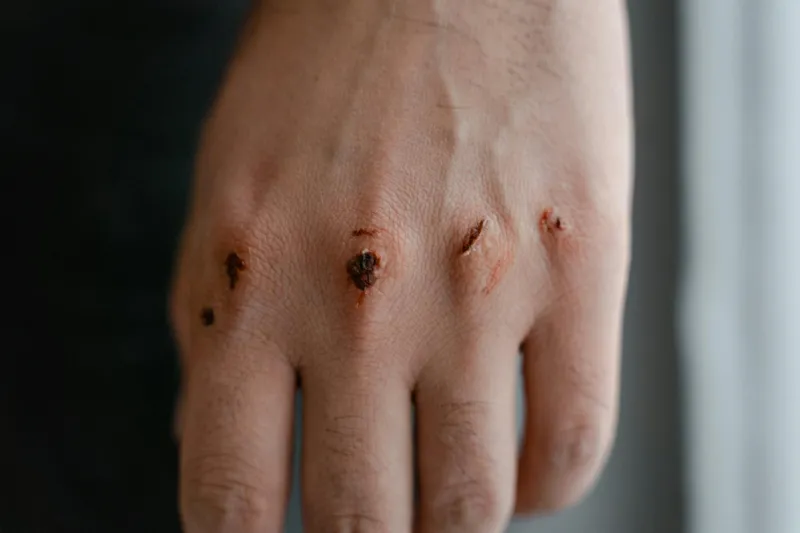
Ask most Americans about cracking knuckles, and you'll get the same response: "Don't do that, you'll get arthritis." It's one of those parental warnings that gets passed down through generations, right alongside "don't sit too close to the TV" and "wait 30 minutes after eating before swimming."
But here's what's fascinating about the knuckle-cracking myth: unlike some health misconceptions that started with outdated medical advice, this one never had any scientific basis to begin with.
The Doctor Who Cracked His Way to Scientific Fame
The most compelling evidence against the arthritis myth comes from Dr. Donald Unger, a California physician who conducted what might be the longest self-experiment in medical history. Starting in his teens, Unger cracked the knuckles on his left hand at least twice daily for over 60 years. His right hand? He left it completely alone.
The result? After six decades of deliberate knuckle abuse on one side, both hands showed identical levels of arthritis — which is to say, virtually none. Unger's dedication to disproving this myth even earned him an Ig Nobel Prize in 2009, recognizing research that "first makes people laugh, then makes them think."
What's Actually Happening When You Crack Your Knuckles
That satisfying "pop" sound isn't your joints deteriorating. It's actually gas bubbles in your synovial fluid — the lubricant that keeps your joints moving smoothly. When you stretch or bend your fingers in certain ways, you create negative pressure in the joint space, causing dissolved gases (mainly nitrogen) to form bubbles that then collapse with an audible pop.
Think of it like opening a soda bottle. The pressure change releases dissolved carbon dioxide, creating bubbles and that familiar fizzing sound. Your knuckles work similarly, just with different gases and a more dramatic acoustic effect.
Why the Myth Took Hold So Firmly
So where did this persistent belief come from? The answer lies in a perfect storm of cultural disgust, parental authority, and logical-sounding but incorrect assumptions.
First, many people find the sound genuinely unpleasant. It's sharp, unexpected, and suggests something might be breaking. When parents hear their kids making this noise repeatedly, the natural response is to make it stop — and claiming health consequences is an effective deterrent.
Second, the logic seems sound on the surface. Arthritis involves joint problems, knuckle-cracking involves joints, and it certainly sounds like something's wrong. Without understanding the actual mechanism, it's easy to assume that repeated "abuse" of joints would lead to long-term damage.
The Real Research on Joint Health
Multiple studies have examined the relationship between habitual knuckle-cracking and arthritis, and the results are remarkably consistent: there isn't one. A 2011 study published in the Journal of the American Board of Family Medicine reviewed decades of research and found no correlation between knuckle-cracking and arthritis development.
Some studies have suggested that habitual knuckle-crackers might have slightly reduced grip strength or minor hand swelling, but these effects are minimal and don't constitute joint disease. The overwhelming medical consensus is that knuckle-cracking is harmless.
Why Doctors Don't Bother Correcting This Myth
Here's something interesting: many healthcare providers don't actively debunk the knuckle-cracking myth, even though they know it's false. Why? Because knuckle-cracking, while harmless, can be socially annoying. If patients believe it might cause arthritis and therefore avoid doing it in public, that solves a minor social problem without any medical downside.
It's a rare case where a harmless myth might actually improve social interactions, so there's little motivation to correct it aggressively.
The Broader Pattern of Joint Myths
The knuckle-cracking misconception fits into a larger category of joint-related myths that persist in American culture. People worry that "popping" sounds from knees, backs, or necks indicate damage, when these are usually just normal joint mechanics at work.
This reflects a broader tendency to assume that unusual body sounds or sensations must indicate problems, even when they're completely normal physiological processes.
The Real Story
The truth about knuckle-cracking is refreshingly simple: it's a harmless habit that produces a distinctive sound through normal joint mechanics. The arthritis warning was never based on medical evidence — it was a parental deterrent that took on a life of its own.
Dr. Unger's six-decade experiment might be the most definitive debunking of a health myth in modern medicine. His willingness to crack his knuckles 36,500+ times in the name of science gave us clear proof that this particular parental warning was well-intentioned but medically unfounded.
So the next time someone warns you about knuckle-cracking and arthritis, you can share the real story: it's a myth that sounds logical but has never had any scientific support. Your joints will be just fine, even if your social standing might take a hit.