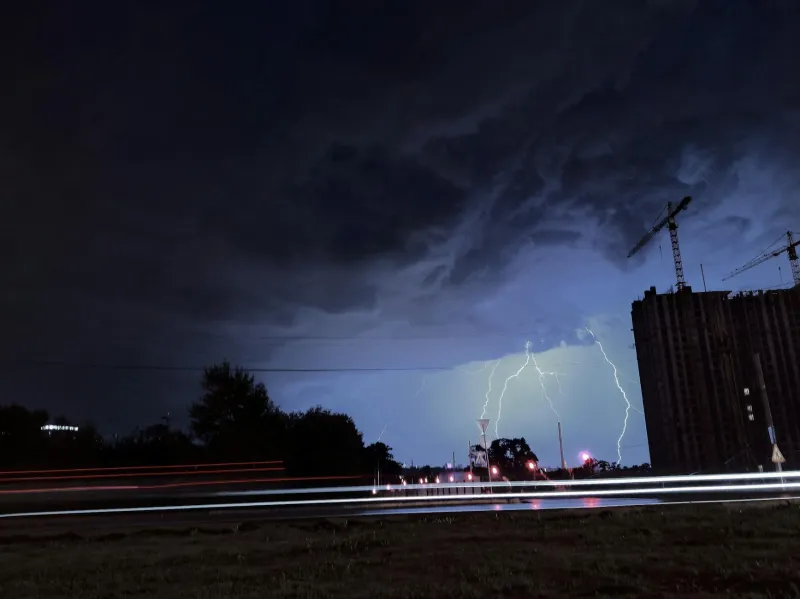
Ask any American to name a piece of weather wisdom their grandparents taught them, and "lightning never strikes the same place twice" will top the list. It's the kind of folksy saying that gets repeated at backyard barbecues, used in motivational speeches, and passed down through generations as established fact.
But meteorologists who study lightning strikes can tell you exactly where lightning will hit repeatedly — and they have the data to prove it.
The Empire State Building: America's Lightning Magnet
New York's most famous skyscraper gets struck by lightning approximately 25 times per year, with some storms producing multiple strikes in a single evening. The building's lightning rod system channels these strikes safely to ground, protecting both the structure and surrounding areas.
During one particularly active thunderstorm in 2011, photographers captured the Empire State Building being struck eight times in just 24 minutes. The dramatic images went viral, but for meteorologists, this wasn't surprising — it was predictable physics in action.
Why Tall Structures Become Lightning Targets
Lightning follows the path of least electrical resistance between storm clouds and the ground. Tall, pointed structures create what meteorologists call "preferential strike points" — locations where the electrical field becomes concentrated enough to initiate lightning channels.
The Empire State Building's height (1,454 feet including its antenna) and metallic construction make it an ideal conductor. During thunderstorms, electrical charge builds up on the building's surface, creating an upward streamer that essentially reaches toward downward lightning leaders from storm clouds.
This same physics explains why other tall structures — radio towers, cell phone antennas, and mountain peaks — get struck repeatedly. The CN Tower in Toronto averages about 75 strikes per year. Chicago's Willis Tower sees dozens of strikes annually.
The Origin Story Nobody Can Pin Down
Despite its popularity, the exact origin of "lightning never strikes the same place twice" remains unclear. The phrase appears in American literature as early as the 1850s, but initially as a metaphor for unlikely coincidences rather than a statement about meteorology.
Some historians trace the saying to 19th-century observations of lightning damage in rural areas. Before tall buildings concentrated lightning strikes, observers might notice that lightning seemed to hit different trees or structures rather than repeatedly damaging the same location. But this observation reflected the random distribution of targets in relatively flat terrain, not any inherent property of lightning itself.
How a Metaphor Became Meteorological "Fact"
The transformation from metaphor to supposed scientific fact illustrates how folk wisdom evolves. The phrase originally meant "don't worry about extremely unlikely events happening twice" — similar to saying "lightning in a bottle" to describe something rare and unrepeatable.
But as the saying spread through American culture, people began interpreting it literally. By the early 20th century, many Americans believed lightning possessed some mysterious property that prevented it from striking the same location multiple times.
What Lightning Scientists Actually Observe
Modern lightning detection networks track millions of strikes annually across the United States. The data reveals patterns that completely contradict the popular saying:
Geographic hot spots: Certain regions, particularly Florida and the Gulf Coast, see dramatically higher strike densities year after year.
Seasonal predictability: Lightning activity follows consistent seasonal patterns, with peak activity during summer months in most regions.
Topographic preferences: Mountains, tall buildings, and isolated high points get struck repeatedly because they provide the most direct path to ground.
Same-storm multiple strikes: Individual structures often get hit multiple times during single thunderstorms, as the electrical conditions that attracted the first strike persist throughout the storm.
The Technology That Tracks Every Strike
The National Lightning Detection Network uses sensors across the United States to pinpoint lightning strikes within 500 meters of their actual location. This system processes about 30 million cloud-to-ground lightning strikes annually, creating detailed maps that show exactly where lightning hits repeatedly.
Commercial lightning detection services sell this data to insurance companies, utility providers, and emergency management agencies. The information helps predict where lightning damage is most likely to occur — knowledge that would be impossible if lightning truly never struck the same place twice.
Why Some Places Never Get Hit
While certain locations attract repeated strikes, others rarely see lightning at all. Areas surrounded by taller structures, locations in natural valleys, or regions with specific atmospheric conditions might go decades without direct strikes.
This creates a survivorship bias in casual observation. People notice when lightning hits the same prominent landmark repeatedly, but they don't systematically track all the places lightning never strikes. The dramatic, memorable cases reinforce the illusion that repeat strikes are unusual.
The Real Lightning Safety Rules
Understanding that lightning does strike the same place twice actually improves safety planning:
Avoid high ground during storms: Hills, ridges, and elevated areas concentrate lightning risk.
Stay away from tall isolated objects: Trees, flagpoles, and towers in open areas attract strikes.
Seek substantial shelter: Buildings with lightning protection systems and hard-topped vehicles provide safer options than small structures or convertibles.
Remember the 30-30 rule: Seek shelter when thunder follows lightning by 30 seconds or less, and wait 30 minutes after the last thunder before resuming outdoor activities.
How Weather Folklore Shapes Risk Perception
The "never strikes twice" myth demonstrates how catchy phrases can distort risk assessment. People who believe this saying might assume that recently struck areas are safer during subsequent storms — the opposite of what meteorological evidence suggests.
Similar misconceptions affect other weather-related decisions. The phrase "red sky at night, sailor's delight" contains some meteorological truth, while "lightning never strikes twice" contains none. But both get repeated with equal confidence because they share the same memorable, rhyming structure.
What Modern Meteorology Teaches Us
Contemporary lightning research reveals a phenomenon far more complex and predictable than folk wisdom suggests. Lightning strikes follow physical laws related to electrical conductivity, topography, and atmospheric conditions. These factors don't change between storms, which is why the same locations get hit repeatedly.
Weather modification technology even exploits this predictability. Cloud seeding operations use tall structures and rockets to trigger lightning strikes in controlled conditions, helping protect airports and other sensitive facilities.
The Lesson Beyond Lightning
The persistence of the "lightning never strikes twice" myth illustrates how appealing phrases can outlive the observations that inspired them. What began as a metaphor for rare coincidences evolved into supposed meteorological fact, despite contradicting everything scientists observe about lightning behavior.
This transformation reveals something important about how folk wisdom spreads and persists. Memorable phrases that capture emotional truths — like the idea that we shouldn't worry about repeat disasters — can survive long after evidence undermines their literal accuracy.
The Empire State Building will keep getting struck by lightning dozens of times each year, regardless of what American folklore claims. But the real story behind this myth teaches us something valuable about how catchy sayings sometimes matter more than scientific accuracy in popular culture.