How One Doctor's Letter About Chinese Food Created America's Most Persistent Food Scare
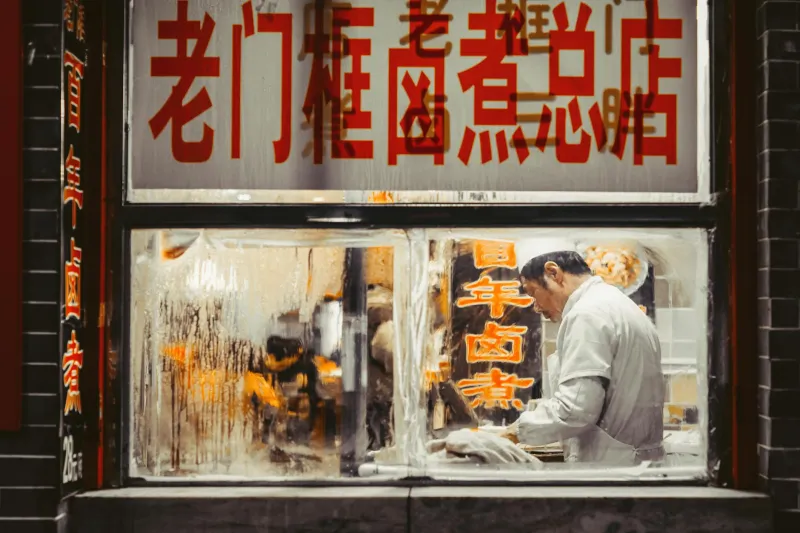
Walk into almost any Chinese restaurant in America, and you'll see the same four words somewhere on the menu or window: "No MSG Added." It's become such a standard disclaimer that most people assume monosodium glutamate must be genuinely dangerous — why else would restaurants go out of their way to avoid it?
The truth is far stranger. One of America's most enduring food scares began with a single letter published in a medical journal in 1968. The author openly admitted he was speculating. The symptoms he described were never scientifically verified. And despite decades of research failing to support his claims, the fear of MSG continues to shape how Americans eat.
The Letter That Started It All
Dr. Robert Ho Man Kwok was a Chinese-American physician working in Maryland when he wrote to the New England Journal of Medicine in April 1968. His letter, published in the journal's correspondence section, was brief and casual — more like a modern blog post than a research paper.
 Photo: New England Journal of Medicine, via www.liblogo.com
Kwok described experiencing numbness, weakness, and palpitations after eating at Chinese restaurants, particularly those in Chinatowns. He speculated that the symptoms might be caused by cooking wine, high sodium content, or monosodium glutamate. He explicitly stated that he had "no scientific evidence" for any of these theories.
The letter was published under the title "Chinese Restaurant Syndrome" — a name that would stick for decades and immediately linked the supposed condition to a specific cuisine and culture.
How Speculation Became "Scientific Fact"
Kwok's letter might have been forgotten if not for the media attention it generated. Newspapers picked up the story, and what had been presented as one doctor's personal speculation was reported as a medical discovery. The tentative "might be caused by" became definitive "is caused by."
The timing was significant. This was 1968, when Americans were becoming increasingly interested in both Chinese food and food safety. The letter provided a scientific-sounding explanation for any discomfort people might feel after eating unfamiliar cuisine.
More importantly, it gave a name to a collection of vague symptoms that people could retrospectively attribute to their dining experiences. Once "Chinese Restaurant Syndrome" entered the popular vocabulary, confirmation bias took over — people who felt unwell after eating Chinese food now had a ready explanation.
The Research That Never Materialized
The scientific community took Kwok's letter seriously enough to investigate. Over the following decades, researchers conducted dozens of controlled studies trying to reproduce the supposed MSG sensitivity.
The results were consistently negative. In double-blind studies — where neither researchers nor participants knew who was receiving MSG — scientists couldn't reliably trigger the symptoms Kwok had described. When people did report reactions, they occurred just as often with the placebo as with actual MSG.
A comprehensive review published in the Journal of Nutrition in 2000 examined all the existing research and concluded: "The existence of Chinese Restaurant Syndrome as a clinical condition has not been substantiated."
But by then, the damage was done. MSG had become firmly established in the American mind as a dangerous food additive.
The Irony of Natural Glutamate
The fear of MSG becomes even more puzzling when you understand what glutamate actually is. It's one of the most common amino acids in nature, found in high concentrations in foods that Americans eat regularly without concern.
Parmesan cheese contains more glutamate per serving than most Chinese dishes. Tomatoes, mushrooms, and aged meats are all rich sources. Breast milk contains ten times more glutamate than cow's milk. Your own body produces about 40 grams of glutamate every day as part of normal protein metabolism.
When MSG is added to food, it breaks down into exactly the same glutamate that occurs naturally. Your taste buds and digestive system can't tell the difference between glutamate from a tomato and glutamate from a shaker.
Cultural Bias and the Persistence of Fear
The MSG scare didn't happen in a vacuum. It emerged during a period of significant cultural tension around Asian immigration and cuisine. The fact that the original letter specifically targeted "Chinese Restaurant Syndrome" rather than "glutamate sensitivity" wasn't coincidental.
This cultural component helps explain why the fear has been so resistant to scientific evidence. Studies showing MSG's safety are often dismissed as industry propaganda, while anecdotal reports of reactions are treated as definitive proof. The fear has become less about food science and more about cultural anxiety.
Restaurant owners, many of them Asian immigrants trying to build businesses in a sometimes hostile environment, found it easier to accommodate the fear than fight it. "No MSG" signs became a form of defensive marketing, even for restaurants that had never used the additive in the first place.
The Modern Legacy of a 50-Year-Old Letter
Today, MSG remains one of the most thoroughly studied food additives in history. The FDA classifies it as "generally recognized as safe" — the same category as salt and sugar. International health organizations have reached similar conclusions.
Yet the stigma persists. Food manufacturers have learned to hide glutamate in ingredient lists by using terms like "natural flavor," "yeast extract," or "hydrolyzed protein." These ingredients contain the same glutamate as MSG, but without the negative associations.
The result is a kind of collective cognitive dissonance: Americans avoid MSG while consuming glutamate from other sources without concern. We've created a food fear based not on chemistry or biology, but on branding and cultural bias.
The Real Lesson About Food Scares
The MSG story reveals how quickly scientific speculation can transform into public health panic, especially when it intersects with existing cultural anxieties. One doctor's admittedly unsubstantiated theory became a multi-decade food scare that has shaped restaurant menus and consumer behavior across the country.
It's a reminder that the most persistent health beliefs aren't always the ones with the strongest scientific support — they're often the ones that feel true enough to stick, regardless of what later research reveals.
The next time you see a "No MSG" sign, remember that you're looking at the legacy of a single letter from 1968 — a letter whose author never claimed to have proven anything, but whose speculation became one of America's most enduring food myths.