Standing Desks Won't Save You — The 'Sitting Is the New Smoking' Panic Was Built on Shaky Data
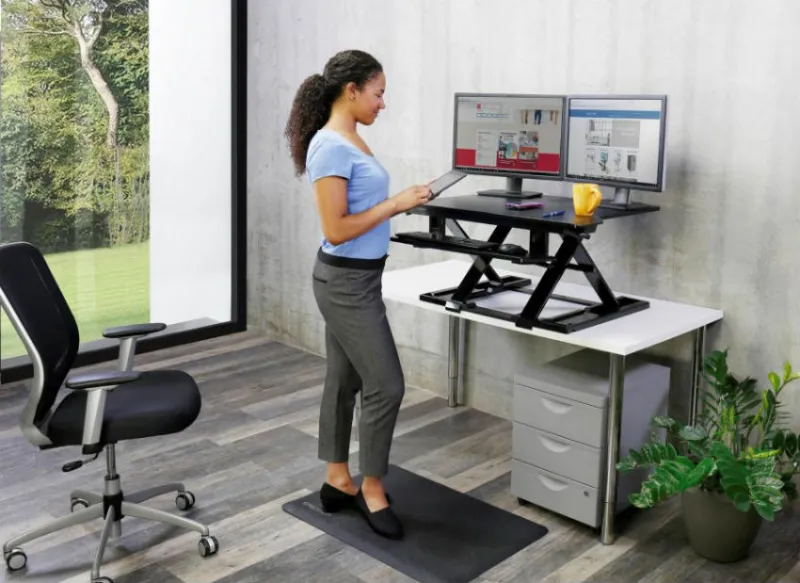
Photo: person at standing desk office workplace ergonomic, via www.jimbeamracing.com.au
At some point in the early 2010s, a particular phrase started showing up everywhere. In wellness newsletters, in TED Talks, in corporate HR memos, and eventually on the marketing pages of furniture companies selling height-adjustable desks for $800 and up: sitting is the new smoking.
It was a perfect piece of health communication. Punchy. Alarming. Easy to remember. And it worked — Americans bought standing desks in enormous numbers, and the ergonomic furniture market exploded into a multi-billion dollar industry practically overnight.
There was just one problem. The science behind the slogan was never as clean as the slogan itself.
How the Comparison Started
The phrase is most often attributed to Dr. James Levine, an endocrinologist at the Mayo Clinic, who began studying sedentary behavior and metabolic health in the early 2000s. His research, and the work of other researchers around the same time, found genuine associations between prolonged sitting and a range of negative health outcomes: increased risk of cardiovascular disease, type 2 diabetes, and all-cause mortality.
Those findings were real, and they were worth taking seriously. The problem came in how they were communicated — and how quickly the nuance got stripped away.
For one thing, most of the early studies were observational. They found correlations between sitting time and health outcomes, but correlation is not causation. People who sit for very long periods are also more likely to be sedentary in other ways, to have lower-income jobs with fewer health resources, to eat differently, and to experience higher levels of chronic stress. Untangling the specific effect of sitting from all those other variables is genuinely difficult, and the early research didn't always do it cleanly.
The comparison to smoking was where things really went off the rails. Smoking is a direct biological cause of specific diseases. Cigarette smoke contains carcinogens that damage tissue and trigger cancer. Sitting is a posture. Equating the two implied a mechanistic harm that the research simply hadn't established.
What the More Careful Research Shows
As the science matured, the picture got more complicated — and more interesting.
A 2018 study published in the British Journal of Sports Medicine found that the relationship between sitting and mortality risk was heavily modified by physical activity levels. People who sat for long periods but also exercised regularly showed dramatically reduced health risks compared to sedentary people who sat just as much. In other words, it wasn't sitting that was the primary villain — it was the overall absence of movement throughout a person's life.
Researchers at Columbia University found similar patterns. Their 2017 study in the Annals of Internal Medicine suggested that breaking up sitting time with short movement breaks was associated with better metabolic markers — but that the key factor was the movement, not the mere act of standing.
And that's the distinction that the standing desk industry quietly glossed over. Standing is not the same as moving. A person who swaps their seated desk for a standing one and then stands in the same position for eight hours has not meaningfully changed their activity profile. They've just changed their posture — and potentially added new problems, since prolonged standing is associated with its own issues, including lower back pain, varicose veins, and fatigue.
The Standing Desk Problem
To be clear: there's nothing wrong with a standing desk. The ability to change positions throughout the day — to sit for a while, stand for a while, walk around — is genuinely beneficial. The problem was never the desk. It was the marketing promise attached to it.
When standing desks were sold as a direct health intervention, a kind of mechanical solution to a behavioral problem, they encouraged people to believe they had addressed their sedentary lifestyle by making a single purchase. That's a seductive idea, but it doesn't hold up.
A 2020 review published in the Cochrane Database of Systematic Reviews looked at workplace interventions designed to reduce sitting time and found that while standing desks did reduce sitting hours, there was little evidence of meaningful improvement in health outcomes over the periods studied. The desks changed behavior without necessarily changing health.
What Actually Helps
The research that has held up best points toward movement as the key variable — not sitting, not standing, but genuine physical activity distributed throughout the day.
Short walks. Stairs instead of elevators. Walking meetings. Getting up to talk to a colleague instead of sending an email from twenty feet away. These kinds of small, frequent movements appear to have more metabolic benefit than any specific furniture arrangement.
Longer exercise sessions matter too, but they don't fully cancel out a completely inactive workday. The body responds well to being used regularly, not just intensely for one hour and then parked for the other fifteen.
The Real Takeaway
Sitting isn't going to kill you the way cigarettes kill you. The comparison was always more rhetorical than scientific — a way of communicating urgency, not a literal biological equivalence.
What the research does support is that a life without regular movement carries real health costs, and that most Americans — who spend enormous amounts of time in cars, at desks, and on couches — could benefit from more of it.
But the solution isn't a standing desk. It's moving more, more often, in whatever ways fit your actual life. That's less marketable than a piece of furniture. It's also what the science actually says.