Your Bananas Aren't Actually Going Bad Faster — Your Memory of How They Used to Look Is Just Wrong
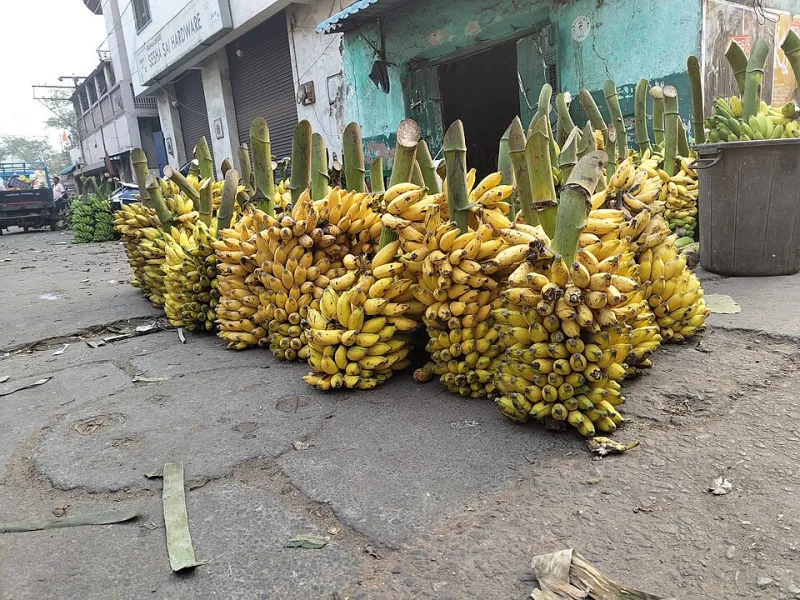
Photo: రవిచంద్ర, CC BY-SA 4.0, via Wikimedia Commons
Somewhere in the last few years, a minor complaint became a genuine cultural grievance: produce just doesn't last the way it used to. Bananas go brown before you finish the bunch. Strawberries get soft within a day. Avocados hit that perfect window for approximately forty-five minutes on a Tuesday. And if you bring this up around people in their thirties and forties, you'll get a lot of nodding agreement and stories about fruit that seemed to last forever when they were kids.
The thing is, the science doesn't really support a dramatic change in how fast produce ripens. What has changed is almost everything around the produce — and that turns out to matter quite a bit.
The Supply Chain Your Grocery Store Doesn't Advertise
Bananas sold in American supermarkets are picked green. Not just slightly underripe — deeply, firmly, almost plastic green. They're harvested this way intentionally because they need to survive international shipping from Central and South America, and a ripe banana would be a bruised, fermented mess by the time it reached a distribution center in Ohio.
Once bananas arrive stateside, they go into ripening rooms — temperature- and gas-controlled environments where they're exposed to ethylene, the same compound bananas produce naturally as they ripen. Retailers can dial in exactly how yellow they want the fruit to be before it hits the shelf. This means the banana you buy on a Monday has already been through a controlled acceleration process before you ever see it.
Here's where perception enters the picture: the ripening process doesn't stop when the banana leaves the facility. It continues at your house. If the banana was already several days into its ripening arc before you bought it, your window at home is going to feel shorter than you expect — not because the banana is biologically different from bananas of twenty years ago, but because you're receiving it at a later stage in its lifecycle.
Why Your Memory of "Better Fruit" Is Unreliable
Nostalgia is a genuinely poor food critic. Human memory for sensory experience — taste, texture, how long something lasted in the fruit bowl — is reconstructive rather than accurate. We don't replay food memories like a video file. We rebuild them, and we rebuild them with a bias toward the positive. Psychologists call this rosy retrospection: the consistent tendency to remember past experiences as better than they actually were.
The strawberries from your grandmother's garden really did taste better — because you picked them ripe, ate them the same day, and experienced them in a context full of positive associations. The strawberries from a 1990s supermarket were probably just as disappointing as today's. You just don't remember those ones.
What Actually Has Changed — And It's Complicated
That said, dismissing the whole concern as pure nostalgia isn't quite right either. A few real things have shifted.
First, retail expectations around cosmetic appearance have become more demanding over the decades. Stores want uniformly yellow bananas, perfectly red apples, and unblemished berries. Producing that appearance consistently requires harvesting earlier and relying more heavily on post-harvest ripening processes — which can mean the fruit reaches peak ripeness faster once it's in your home environment.
Second, there's a variety question that's specific to bananas. The Cavendish — the variety that dominates American supermarkets — is genuinely under threat from a fungal disease called Fusarium wilt (Tropical Race 4), and growers have been quietly dealing with crop stress and yield issues in some regions. Stressed plants can produce fruit with slightly different ripening characteristics. This isn't a dramatic change yet, but it's real.
Third, home refrigerator temperatures have actually gotten colder in newer, more efficient models. Cold dramatically slows the ripening of some produce but can damage others — including bananas, which are genuinely cold-sensitive and will blacken quickly if stored below about 56 degrees. If you're keeping bananas near the back of a modern fridge or on a very cold counter near an air conditioning vent, you may be triggering faster browning through temperature shock rather than any change in the fruit itself.
The Pricing Angle Nobody Talks About
There's also a financial dimension worth acknowledging. Bananas are one of the most price-controlled items in American grocery retail — they've hovered around 19 to 29 cents per pound for decades, even as the cost of fuel, labor, and shipping has risen substantially. That price pressure filters back through the supply chain and creates incentives to move product faster and with less margin for error at every stage. A banana that sits in the ripening room one extra day costs money. A banana that arrives at your house slightly further along in its ripening process costs you money — in the form of food you throw away.
The Practical Takeaway
Buy bananas that still have some green on them if you want a longer window at home. Store them away from other fruit — bananas emit ethylene gas that accelerates ripening in nearby produce, which is the real reason your other fruit seems to go faster when bananas are in the bowl. And if you need to slow things down, separate the bananas from the bunch and wrap the stem ends in plastic wrap, which reduces ethylene release.
Your bananas aren't betraying you. They're just arriving at your door with more miles on them than you realize.