Tequila Doesn't Make You Mean and Wine Doesn't Give You Headaches — Your Brain Is Making That Up
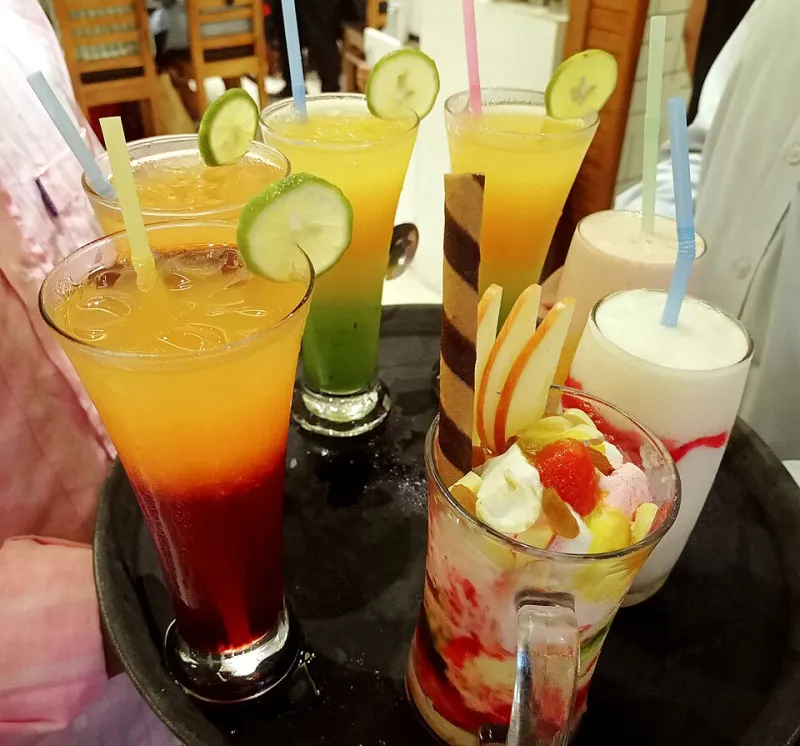
Photo: Subrata Ghose, CC BY-SA 4.0, via Wikimedia Commons
Tequila Doesn't Make You Mean and Wine Doesn't Give You Headaches — Your Brain Is Making That Up
Ask anyone at a bar about their relationship with different types of alcohol and you'll hear it immediately. "I don't do tequila — it makes me crazy." "Red wine always gives me a headache." "Whiskey makes me sad, I don't know why." "Beer just makes me tired."
These are stated with the confidence of personal experience. They feel like verified facts, accumulated through years of firsthand evidence. The problem is that controlled research doesn't support them — at least not in the way most people assume.
The Personality Profiles We've Given Our Drinks
American drinking culture has assigned clear emotional identities to different types of alcohol. Tequila is wild and unpredictable. Wine is sophisticated but headache-prone. Whiskey is melancholy or bold depending on who you ask. Beer is relaxed and social. These aren't just casual observations — they're deeply embedded cultural narratives, reinforced by advertising, movies, music, and decades of shared social storytelling.
The assumption underneath all of it is that different alcoholic beverages produce chemically distinct effects on your mood, behavior, and morning-after suffering. That the type of drink you choose actively shapes the kind of experience you'll have.
Researchers have spent considerable time examining whether that assumption holds up.
What the Research Actually Shows
At its chemical core, alcohol is alcohol. Ethanol — the active compound in every beer, wine, cocktail, and shot — works the same way regardless of what it's fermented or distilled from. It affects the central nervous system through the same mechanisms whether it came from grapes, agave, grain, or hops.
A landmark study published in the journal Psychopharmacology gave participants either vodka or tonic water without telling them which they'd received. Some participants who were given tonic water believed they'd had alcohol — and reported feeling drunk. Some who received vodka believed they'd had tonic — and felt relatively sober. Their subjective experience tracked their expectation, not their blood alcohol content.
This is called the "placebo effect of alcohol," and it's remarkably powerful. What people believe they've consumed shapes how they behave and how they feel, sometimes more than what they've actually consumed.
A large-scale UK study that surveyed over 29,000 people found that respondents reported different emotional responses to different alcohol types — but the researchers were careful to note that these associations are heavily influenced by the context in which those drinks are typically consumed, personal history with the drink, and expectation. Shots of spirits are often consumed quickly in high-energy social environments. Wine is often consumed more slowly in calmer settings. The drink doesn't create the mood — the situation does, and the drink becomes associated with it.
So What About Congeners?
There is one legitimate chemical variable worth discussing: congeners. These are trace compounds produced during fermentation and aging — things like acetaldehyde, methanol, tannins, and various fusel alcohols. Different drinks contain different amounts. Dark spirits like bourbon, brandy, and red wine contain significantly more congeners than clear spirits like vodka or gin.
Research does suggest that higher congener content is associated with more severe hangover symptoms. A study in the journal Alcoholism: Clinical and Experimental Research found that bourbon, which is high in congeners, produced worse hangover symptoms than vodka at the same blood alcohol level.
This is real, and it's worth knowing. But congeners explain hangover severity, not emotional personality. They don't explain why tequila specifically makes someone feel aggressive, or why wine makes someone weepy. And they don't explain why the same person can drink red wine in one setting with no headache and report a splitting one the next time — when the more likely variable is how much water they drank, how late they stayed up, or how much food they ate.
How Marketing Built the Myth
Alcohol brands have spent billions of dollars crafting emotional identities for their products. Tequila marketing in the 1980s and 90s leaned hard into rebellious, wild imagery. Craft whiskey brands sell introspection and heritage. Wine marketing oscillates between sophistication and indulgence. Beer advertising is almost universally about relaxed social connection.
These campaigns didn't just describe how people felt — they helped construct how people expected to feel. And once an expectation is set, the brain is remarkably good at delivering on it.
Add to that the power of personal narrative. If you had a genuinely bad experience with tequila once — drank too much, too fast, in a chaotic environment — your brain files that under "tequila is dangerous for me." Confirmation bias does the rest. Every subsequent tequila experience gets filtered through that lens.
Why Your Personal Evidence Feels So Convincing
This is the part that makes the myth so durable: your own experience genuinely feels like proof. You drank tequila and got into an argument. You had two glasses of red wine and woke up with a headache. The causal connection feels obvious.
But controlled conditions — matched doses, blind administration, consistent settings — repeatedly show that these experiences are shaped by variables people don't track: total volume consumed, speed of consumption, hydration, food intake, sleep, stress level, and the social dynamics of the evening. The spirit type is rarely the decisive variable.
Our brains are pattern-recognition machines. They find causes for effects even when the real cause is more complicated or less satisfying.
The Takeaway
Different alcoholic drinks aren't emotionally neutral — but the differences are far less about what's in the bottle than about what's in your head, your history, and your environment. Congeners are a real variable for hangover intensity. Everything else — the mood profiles, the personality associations, the specific emotional effects — is largely constructed by expectation and context.
Tequila doesn't make you mean. Wine doesn't inherently cause headaches. Your brain has just been telling that story for so long it started to feel like chemistry.