The Great Wall Was Never the One Thing Visible From Orbit — A 1930s Cartoon Sold That Story

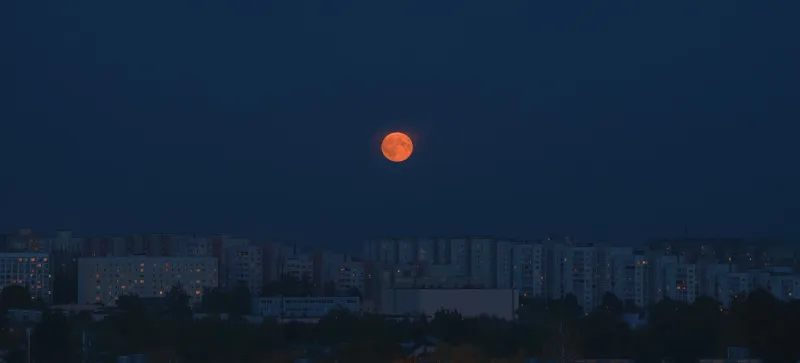
Photo: Jakub Hałun, CC BY-SA 4.0, via Wikimedia Commons
Ask almost anyone who sat through elementary school geography in the United States and they can still recite it: the Great Wall of China is the only man-made object visible from space. It shows up in textbooks, trivia nights, and at least one animated movie. It is also not true, and hasn't been at any point in the history of spaceflight.
What makes the myth interesting isn't that it's wrong. It's that it was confidently stated, in print, decades before anyone was in a position to check.
A fact invented before the fact-checkers existed
The idea predates rockets. In 1909, the American missionary and traveler William Edgar Geil published a book on the Great Wall and asserted that it was the only work of man visible from the moon. He had not been to the moon. Nobody had. It was a rhetorical flourish dressed up as an observation, and it traveled.
Then came the accelerant. Robert Ripley's Believe It or Not! — a syndicated cartoon feature that specialized in exactly this kind of cockeyed factoid — turned the claim into an illustration in the 1930s, complete with the wall arcing across a lunar landscape and tiny moon-men admiring it. Ripley's had an enormous readership, and an illustrated claim in a wildly popular newspaper panel has a way of hardening into received wisdom. From there it went into schoolbooks, quiz shows, and the general-purpose fact pile that nobody reopens.
By the time human beings actually got above the atmosphere, the claim had a thirty-year head start.
What the people up there actually say
Their reports have been remarkably consistent, and they do not support the myth.
Yang Liwei, China's first astronaut, said after his 2003 flight that he had not been able to see the wall. Chris Hadfield, who spent months aboard the International Space Station, has been blunt about it. NASA astronaut Jay Apt, who flew four shuttle missions, put the practical version this way: the wall is not visible to the naked eye from orbit, though under excellent conditions with binoculars and a very good idea of where to look, you might pick out a segment.
There have been photographs. In 2004, astronaut Leroy Chiao captured a section of the wall with a long lens from the station. That's a camera doing the work of a telescope, aimed by someone who knew the exact coordinates. It's a real image and a real achievement. It is not what the myth claims.
The arithmetic is not close
Here's the unglamorous reason. The wall's walkable top is roughly 5 to 7 meters wide. The station orbits at about 400 kilometers. At that distance, a 6-meter-wide object subtends an angle of a few arcseconds — call it twenty times narrower than the finest detail a person with 20/20 vision can resolve. To see it with your eyes from low Earth orbit, you would need something closer to 20/400 acuity: legally blind, but in the opposite direction.
Width isn't the only problem. Contrast is worse. The wall is a gray-brown stone and brick structure running through gray-brown mountains, and from orbit the human eye mostly registers a blur of terrain. Distance vision in space is limited less by sharpness than by whether one muted color stands out against another. It usually doesn't.
Meanwhile, plenty of other things genuinely are visible: interstate highways, airport runways, large bridges, city grids at night, the enormous greenhouse fields of Almería in Spain, and the terraced rice paddies of Asia. The claim's real offense is that it makes the wall sound like a fluke of visibility when the sky is full of evidence of human construction.
How the myth kept its job
Part of the answer is that the correction is boring. "The Great Wall is not visible from space" is a denial. "The Great Wall is a 21,000-kilometer network of fortifications built over two millennia" is a fact. Denials don't travel.
Part of it is goalpost-moving. Each time the claim is corrected, it quietly migrates: from the moon to space, from space to low orbit, from the naked eye to a camera, from a camera to a telephoto lens. At every step the myth survives because its actual claim was never defined precisely enough to die.
And part of it is simple affection. The Great Wall is one of the most extraordinary construction projects in human history. People want it to have a superlative, and "the one thing you could spot from the moon" is a better story than "an engineering marvel that you'd need to be reasonably close to appreciate."
The wall is impressive enough on its own terms. You just have to be within a few hundred kilometers instead of beyond the atmosphere.