Stop Rinsing Your Pasta — The Habit Millions of Home Cooks Swear By Is Ruining the Dish
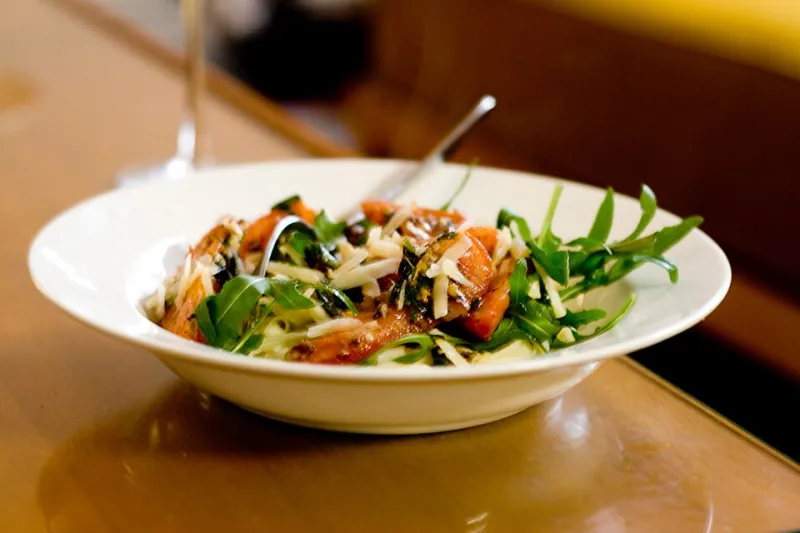
Photo: Lachlan Hardy from Sydney, Australia, CC BY 2.0, via Wikimedia Commons
If you grew up in an American kitchen, there's a decent chance someone taught you to rinse your pasta after draining it. Run cold water over those noodles, the advice goes, and you'll prevent sticking, stop the cooking process, and end up with a better plate of food. It sounds reasonable. It's also one of the more reliably counterproductive things you can do to a pasta dish.
Food scientists, professional chefs, and Italian home cooks have been quietly horrified by this habit for decades. The starchy coating that rinsing washes away isn't a problem to solve — it's the whole point.
How the Rinsing Habit Took Hold in America
The advice to rinse pasta isn't random. It came from a few converging sources, each of which made a certain kind of sense in its original context.
For much of the 20th century, American pasta cooking was largely influenced by industrial food preparation — the kind of cooking done in school cafeterias, hospital kitchens, and large-scale catering operations where pasta was often cooked in batches well ahead of serving time. In those settings, rinsing solved a genuine logistical problem: it stopped the cooking process immediately, cooled the pasta down for storage, and reduced clumping when noodles were going to sit in a hotel pan for an hour before anyone ate them.
That institutional logic eventually filtered into home cooking advice through cookbooks, magazine columns, and eventually the internet, where tips tend to persist regardless of whether their original context still applies. By the time most American households were regularly cooking pasta, the rinse step had become conventional wisdom — repeated confidently by home cooks who had no idea it originated as a workaround for mass catering.
There's also a sensory logic to it that feels convincing: freshly drained pasta is sticky, and rinsing does make it less so. The problem is that stickiness, in this case, is exactly what you want.
What Starch Actually Does for Your Pasta
When pasta cooks in boiling water, it releases surface starch. That starch forms a thin, slightly tacky coating on the outside of each noodle. To most home cooks, this feels like a flaw — the kind of thing that makes pasta clump together in the colander. But to your sauce, it's an invitation.
Starch is one of the primary mechanisms by which sauce adheres to pasta. When you toss hot, starchy noodles with a warm sauce, that coating acts almost like a bonding agent — the sauce grips the noodle rather than sliding off it and pooling at the bottom of the bowl. Food scientists describe this as emulsification: the starch helps fat and water-based components of a sauce bind together and cling to the pasta surface as a unified coating rather than separating.
This is also why experienced Italian cooks — and increasingly, American chefs trained in those traditions — reserve a cup or two of pasta cooking water before draining. That cloudy, starchy liquid is the secret ingredient in countless pasta sauces. Added to a pan with olive oil, butter, or tomato sauce, it helps create a silky, cohesive texture that no amount of cream or cheese can fully replicate. It's essentially a free emulsifier that most American home cooks pour straight down the drain.
When you rinse your pasta, you wash away all of this. The noodles become smooth and cool, the sauce has nothing to grip, and you end up with what food writers sometimes describe as "dressed pasta" rather than "sauced pasta" — noodles sitting in liquid rather than coated by it.
The One Exception Worth Knowing
In the interest of fairness: there are situations where rinsing pasta makes genuine sense.
Cold pasta dishes — pasta salads, noodle salads served at room temperature, certain Asian-style cold noodle preparations — actually benefit from rinsing. In those cases, you're not trying to get sauce to cling to the noodle. You want the noodles to stay separate, cool quickly, and absorb a dressing rather than a hot sauce. Rinsing for a pasta salad is not only acceptable, it's the right call.
The trouble is that the advice to rinse was rarely delivered with that distinction attached. It got generalized into a rule for all pasta cooking, which is where the damage happens.
Why Italian Cooking Never Had This Problem
In Italian culinary tradition, the idea of rinsing pasta is genuinely puzzling. The technique of finishing pasta in the pan with the sauce — known as mantecare — is so fundamental that rinsing would be understood as actively working against the dish. Pasta gets drained and immediately transferred to a pan where sauce is already waiting, with reserved pasta water added to adjust consistency. The whole method depends on that starchy surface being intact.
American pasta cooking developed somewhat separately from those traditions, influenced more heavily by industrial convenience and immigrant adaptations than by the original techniques. The rinse habit is one of the places where those diverging paths produced genuinely different results.
The Takeaway
Rinsing pasta is one of those kitchen habits that looks like it's helping — the noodles stop sticking, they cool down quickly, and everything seems tidier. But what you're actually doing is stripping away the one ingredient that makes sauce behave the way you want it to.
Skip the rinse, save a cup of that cloudy cooking water, and toss your pasta directly into the sauce while everything is still hot. The starch your grandmother told you to wash off was never the enemy. It was the whole point.