The Tongue Taste Map Your Teacher Showed You Was Wrong the Whole Time

The Neat Little Diagram Everyone Learned
If you attended American schools anytime from the 1960s through the early 2000s, you probably remember the tongue map: a tidy diagram showing your tongue divided into distinct zones. Sweet tastes at the tip, salty along the sides, sour further back, and bitter at the very back. It was clean, logical, and completely wrong.
This diagram appeared in countless textbooks, was demonstrated in science classes, and became one of those "facts" that felt obvious once you learned it. Except taste scientists had already proven it false decades before it disappeared from classrooms.
How a German Study Got Lost in Translation
The tongue map traces back to a 1901 German research paper by scientist David Hänig, who was actually studying something much more subtle. Hänig measured taste sensitivity across different parts of the tongue and found minor variations—certain areas were slightly more sensitive to certain tastes than others.
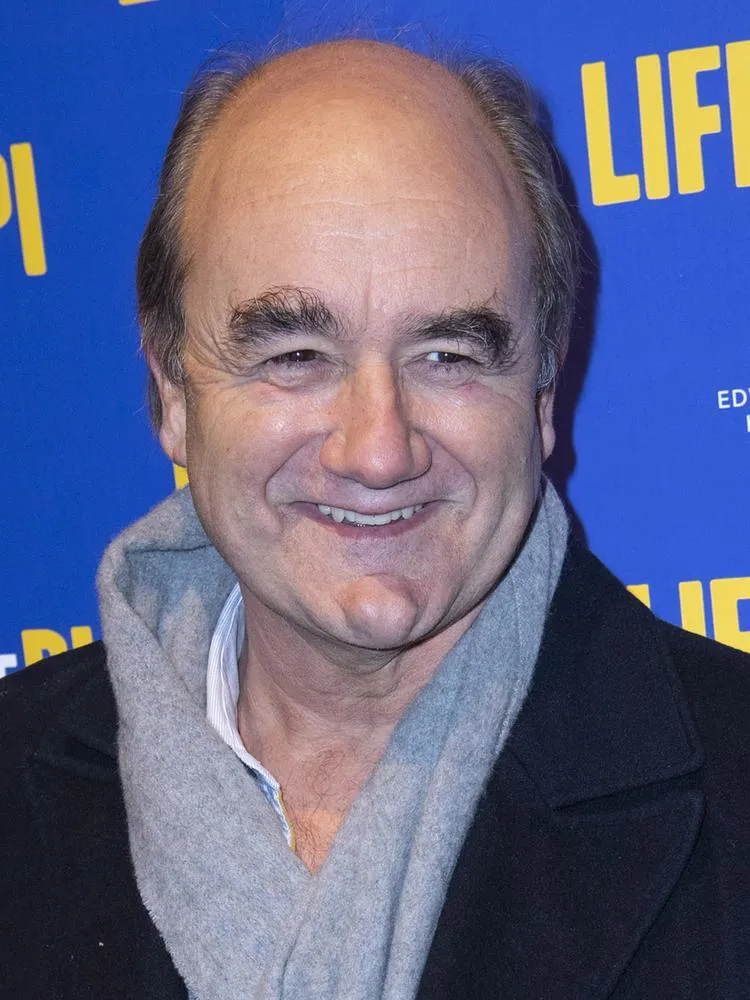 Photo: David Hänig, via media.baselineresearch.com
But when his research was translated and simplified for English-speaking audiences, those minor variations got turned into absolute zones. What started as "this area is 15% more sensitive to sweet tastes" became "this area only tastes sweet things."
The simplified version was easier to teach and remember, so it stuck. American textbook publishers loved diagrams that could reduce complex biology into clear, colorful zones that students could memorize for tests.
When Scientists Proved It Wrong (But Nobody Listened)
By the 1970s, taste researchers had definitively shown that taste receptors for all basic tastes are distributed across the entire tongue. You can taste sweet, salty, sour, and bitter flavors anywhere you have taste buds—which is pretty much everywhere on your tongue, plus parts of your throat and the roof of your mouth.
Studies using modern techniques showed that while there might be tiny variations in sensitivity across different areas, these differences are so small they're meaningless for actual eating. Your tongue doesn't have taste zones any more than your eye has "blue-seeing" and "red-seeing" sections.
But changing textbooks takes time, money, and admitting previous editions were wrong. Publishers kept printing the familiar tongue map because teachers expected it, students knew how to memorize it, and nobody wanted to deal with the complexity of explaining how taste actually works.
The Fifth Taste That Americans Still Don't Recognize
While textbooks were stuck on the four-taste model, scientists had identified a fifth basic taste: umami. This savory, meaty flavor—found in foods like mushrooms, aged cheese, and soy sauce—was officially recognized in the 1980s, but American food culture was slow to adopt the concept.
Japanese scientist Kikunae Ikeda had actually identified umami back in 1908, but Western science dismissed it for decades. Even after it gained scientific acceptance, American textbooks continued teaching the four-taste model well into the 2000s.
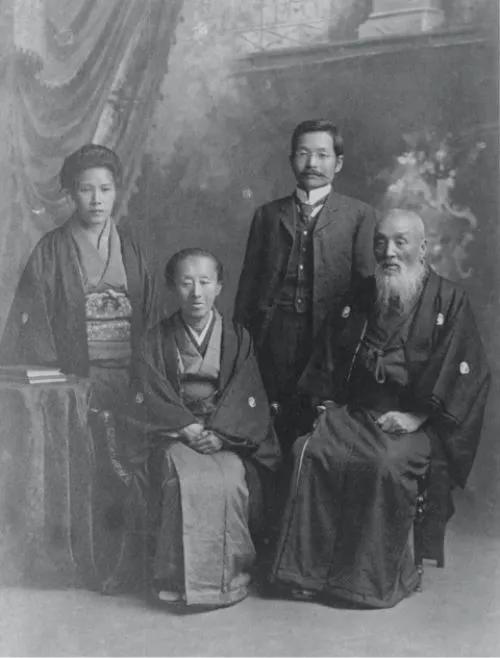 Photo: Kikunae Ikeda, via kilala.vn
Today, most Americans still can't name umami as a basic taste, even though they experience it constantly. We'll describe foods as "savory" or "rich" without recognizing we're talking about a distinct taste category that's as fundamental as sweetness or saltiness.
How Taste Really Works (And Why It's More Interesting)
Your sense of taste is actually a complex system involving not just your tongue, but your nose, throat, and even your brain's expectations. What we call "taste" is mostly smell—your nose contributes about 80% of what you experience as flavor.
Taste buds themselves are scattered across your tongue in tiny clusters, each containing 50-100 receptor cells that can detect multiple taste categories. These receptors send signals to your brain, which combines them with smell information, texture feedback, temperature data, and even visual cues to create the full experience of flavor.
The neat zones of the tongue map made this seem simple, but the real system is far more sophisticated. Your brain is constantly processing multiple sensory inputs and comparing them to memories to determine not just what something tastes like, but whether you should swallow it or spit it out.
Why Educational Inertia Keeps Bad Information Alive
The tongue map persisted for decades after being debunked because changing educational materials is surprisingly difficult. Teachers who learned the four-zone model taught it to their students, who became teachers and taught it to their students. Textbook companies had illustrations, lesson plans, and test questions all built around the familiar diagram.
Even when publishers knew the science had changed, updating meant redesigning chapters, retraining teachers, and explaining to parents why their kids were learning something different from what they remembered. It was easier to keep printing the wrong diagram than to deal with the disruption of being accurate.
This pattern repeats throughout science education. Simplified models that are "good enough" for basic understanding often outlive their usefulness, becoming obstacles to deeper learning rather than stepping stones to it.
What This Means for How We Understand Our Bodies
The tongue map myth reveals something important about how we think about our own biology. We love simple explanations that divide complex systems into neat categories, even when those categories don't reflect reality.
Your body doesn't actually organize itself according to the diagrams in textbooks. Taste, like most biological functions, involves overlapping systems, redundant pathways, and constant communication between different parts. Understanding this complexity helps us make better decisions about everything from food choices to medical care.
The Takeaway About Trusting What You Learned in School
If something you learned in elementary school seems almost too neat and organized to be true, it might be worth investigating. Science education often relies on simplified models that are useful for beginners but become misleading if you never move beyond them.
The tongue map joined a long list of "facts" that were really just convenient teaching tools: the food pyramid, the three states of matter, the idea that different parts of your brain control different functions. These models aren't necessarily wrong, but they're incomplete in ways that matter once you dig deeper.
Next time you eat something delicious, remember that you're experiencing it with your entire tongue, your nose, your brain, and even your expectations. It's messier than the textbook diagram, but it's also much more interesting than four simple zones could ever be.