Airplane Food Gets a Bad Reputation That Belongs to Physics, Not the Kitchen
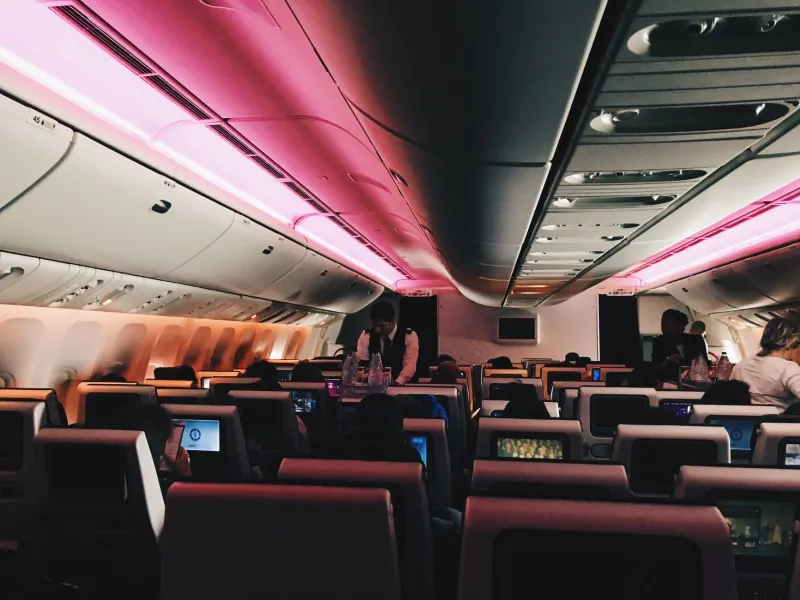
The airline food joke is practically a comedic institution at this point. Jerry Seinfeld built a career partly on it. Passengers groan about rubbery chicken and flavorless pasta with the weary confidence of people who've confirmed the truth firsthand. But here's the thing: the food coming out of airline catering kitchens is frequently prepared by professional culinary teams working to reasonable standards. The problem isn't what happens in the kitchen. It's what happens to your body at 35,000 feet — and it starts before you even take your first bite.
Your Senses Don't Travel Well
When a commercial aircraft reaches cruising altitude, the cabin is pressurized — but not to sea-level pressure. Most commercial flights maintain a cabin pressure equivalent to roughly 6,000 to 8,000 feet of elevation. That's similar to standing in the mountains of Colorado, not on the tarmac in Dallas. That pressure drop does something specific to your sinuses and inner ear that most people notice as ear-popping, but the effects go deeper than that.
At reduced pressure, the mucous membranes lining your nasal passages swell slightly and dry out. The cabin air itself is notoriously low in humidity — typically around 10 to 20 percent, compared to the 30 to 50 percent you'd experience in a reasonably comfortable indoor environment. This combination partially impairs your sense of smell, and smell, as it turns out, is doing the heavy lifting in what you experience as taste.
Most people know intellectually that smell and taste are connected, but the degree of that connection is easy to underestimate. What your taste buds detect directly — sweet, salty, sour, bitter, and umami — is only part of the flavor picture. The rest is retronasal olfaction: the smell molecules that travel up the back of your throat to your olfactory receptors while you chew. When your nasal passages are dry and slightly swollen, that pathway is compromised. Food starts to taste flat before the meal is even served.
The 30 Percent Problem
Researchers at the Fraunhofer Institute in Germany conducted a controlled study in the early 2010s that put real numbers to what most frequent flyers already suspected. In a simulated aircraft cabin — complete with reduced pressure and low humidity — participants rated the perceived intensity of sweet and salty flavors as 20 to 30 percent lower than in normal conditions. Sour, bitter, and spicy sensations were largely unaffected. And umami — that deep, savory quality found in foods like tomatoes, mushrooms, and aged cheese — actually seemed to hold up remarkably well, and in some subjects appeared slightly enhanced.
This finding has a very practical implication that you've probably experienced without realizing it. Tomato juice is one of the most commonly ordered drinks on flights, despite being something many of those same passengers would never order on the ground. Lufthansa famously reported that passengers consume roughly as much tomato juice as beer on their flights — a statistic that surprised even the airline. The explanation isn't that flying makes people crave vegetables. It's that tomato juice, rich in glutamates that drive umami perception, is one of the few beverages that actually tastes better in flight conditions.
The Noise Factor Nobody Talks About
Pressure and humidity explain a lot, but they're not the whole story. A 2010 study published in the journal Food Quality and Preference added another variable that most people wouldn't think to blame: background noise.
Researchers found that exposure to loud, continuous noise — the kind you'd experience from jet engines throughout a flight — specifically suppressed sweet taste perception while leaving bitter and umami tastes relatively intact. The mechanism isn't fully understood, but the effect was measurable and consistent. Passengers listening to loud ambient noise through headphones rated sweet foods as significantly less sweet than control subjects eating in quiet conditions.
This is significant because it's a completely separate mechanism from the pressure and humidity effects. The noise on a commercial aircraft isn't just annoying — it's actively dulling one of your primary flavor senses throughout the entire flight, compounding everything else the cabin environment is already doing to your palate.
Airlines That Figured It Out
Some carriers have actually started designing menus around these physiological realities rather than fighting them. Lufthansa worked with chefs specifically to lean into umami-forward dishes — incorporating more tomato, mushroom, and fermented ingredients — after the Fraunhofer research became widely known. Singapore Airlines has a dedicated team that conducts in-flight taste testing in simulated cabin conditions, not just in standard culinary settings. The difference matters: a sauce that tastes perfectly seasoned at sea level may need significantly more sodium or sugar to register the same way at altitude.
Some airlines have also experimented with noise-canceling headphones as a partial flavor intervention — reducing the engine noise that suppresses sweetness — though this hasn't become a standard practice.
The irony is that the airlines getting the most credit for good food are often the ones that have accepted the constraints of the environment and worked within them, rather than trying to replicate a restaurant experience that the cabin simply can't support.
What This Means for Your Next Flight
Knowing the science doesn't make the food taste better, but it does reframe what's actually happening. If something seems underseasoned or oddly flat, your taste receptors are operating at a genuine physiological disadvantage. Ordering tomato-based dishes, savory options with rich umami profiles, or well-spiced foods tends to hold up better than delicate, lightly seasoned preparations that depend on subtlety — subtlety being exactly what altitude strips away.
And the next time someone makes the obligatory airline food joke, you can point out that the kitchen probably isn't to blame. The real culprit is the pressurized metal tube you're both sitting in.
The takeaway: Altitude, low cabin humidity, reduced air pressure, and constant engine noise all physically suppress sweet and salty flavor perception by up to 30 percent. Airline food often tastes bland not because it's poorly prepared, but because your senses are operating at a significant disadvantage — and umami-rich foods like tomato juice are among the few things that actually taste better as a result.