Your Pet Hamster Is Smarter Than Most Scientists Admitted Until Very Recently

The Intelligence Hierarchy We All Learned Was Wrong
Most Americans carry around a mental ranking system for animal intelligence that goes something like this: humans at the top, then maybe dolphins and chimps, followed by dogs and cats, with everything else—fish, birds, insects—barely registering as conscious at all. This hierarchy feels obvious, almost natural. After all, wouldn't the smartest animals be the ones that look and act most like us?
Turns out, this assumption has been holding back our understanding of animal cognition for decades.
What Modern Research Actually Shows
Neuroscientists studying animal behavior have been overturning these assumptions one by one. Take bees, for instance. Recent studies show they can learn abstract concepts, solve multi-step problems, and even teach other bees new skills. They recognize human faces, understand the concept of zero, and can be trained to play soccer-like games.
Or consider the African grey parrot. These birds don't just mimic sounds—they understand grammar, can count, and demonstrate reasoning abilities that rival those of young children. Alex, the famous research parrot studied by Dr. Irene Pepperberg, could identify colors, shapes, and materials, answer questions about objects he'd never seen before, and even express frustration when he was bored.
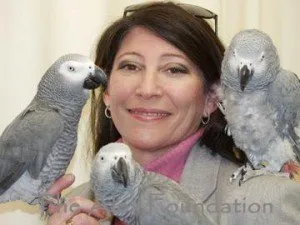 Photo: Dr. Irene Pepperberg, via alexfoundation.org
 Photo: Alex, via cdn.textstudio.com
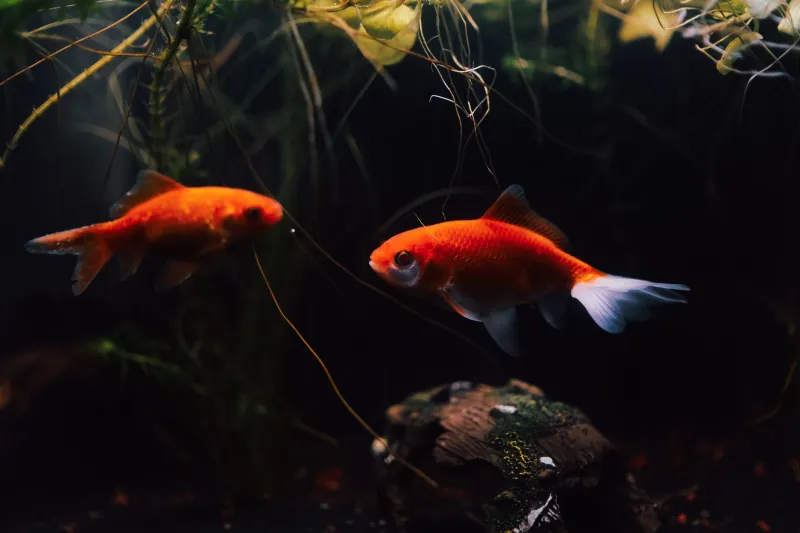
Even more surprising: fish intelligence. While everyone knows goldfish don't actually have three-second memories, the reality goes much further. Fish can navigate complex mazes, recognize individual humans, use tools, and some species engage in cooperative hunting strategies that require planning and communication.
Why We Got It So Wrong
The problem starts with how we define intelligence. For most of the 20th century, animal intelligence research focused heavily on whether creatures could perform tasks that humans find challenging—like using language or making tools. This created a massive blind spot.
Animals evolved to solve different problems than humans face. A bee's ability to calculate the most efficient route between dozens of flowers, factoring in distance, nectar quality, and competition, represents sophisticated computational thinking. But because it doesn't look like human reasoning, we dismissed it as "instinct."
There's also the anthropomorphism trap. We tend to recognize intelligence in animals that express emotions or social behaviors in ways that feel familiar. Dogs get credit for being smart partly because they've evolved to read human facial expressions and respond accordingly. Meanwhile, octopuses—which can solve puzzles, escape from enclosures, and show individual personalities—often get overlooked because their intelligence operates so differently from mammalian thinking.
The Measurement Problem
Traditional animal intelligence tests were designed by humans, for human-like thinking. Imagine trying to assess human intelligence using tests designed by dolphins—we'd probably fail miserably at echolocation-based spatial reasoning, and they might conclude we're pretty dim.
Modern researchers have started developing species-appropriate tests. When scientists test animal intelligence using challenges that match how those animals actually live and think, the results are consistently surprising. Crows can plan several steps ahead, pigeons can categorize abstract concepts, and even some insects demonstrate what looks remarkably like consciousness.
What This Means for How We Think About Thinking
This research revolution isn't just about giving animals more credit—it's changing how we understand intelligence itself. Instead of viewing cognition as a single ladder with humans at the top, scientists now talk about different types of intelligence that evolved to solve different environmental challenges.
Some animals excel at spatial intelligence, others at social reasoning, and still others at pattern recognition that puts human capabilities to shame. The question isn't "how smart is this animal compared to humans?" but rather "what kinds of problems is this animal's brain particularly good at solving?"
Why the Old Assumptions Stuck Around
Several factors kept these misconceptions alive longer than they should have. First, studying animal cognition is genuinely difficult. You can't just ask a bee how it makes decisions or have a fish explain its problem-solving process. Researchers had to develop increasingly sophisticated experimental methods to reveal what animals are actually capable of.
Second, there's a cultural investment in human uniqueness. The idea that we're fundamentally different from other animals supports a lot of philosophical and religious worldviews. Admitting that intelligence is more widely distributed across species can feel threatening to those perspectives.
Finally, the media has consistently simplified animal intelligence research. Complex studies get reduced to headlines like "Scientists Discover Fish Can Think," which makes the findings seem less credible than they actually are.
The Takeaway
The next time you see an ant navigating back to its colony or watch a bird solve a puzzle, remember that you're probably witnessing cognitive processes that scientists are only beginning to understand. Our old hierarchy of intelligence wasn't just wrong—it was preventing us from recognizing remarkable forms of thinking that have been right in front of us all along.
The real story of animal intelligence isn't about which species are "smart" and which aren't. It's about discovering that intelligence comes in more forms than we ever imagined, and that the natural world is full of minds working in ways we're only now learning to appreciate.