A Nobel Prize Started the Left Brain / Right Brain Myth — But the Winner Would Barely Recognize What It Became
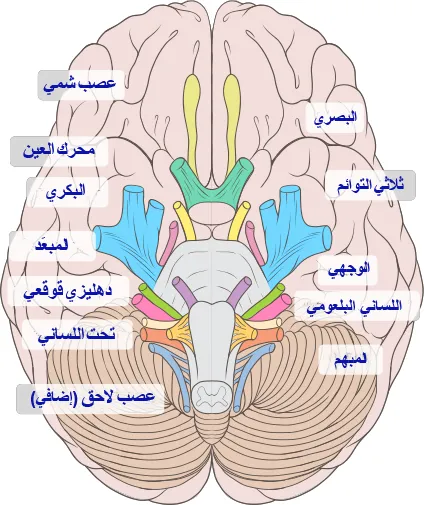
Photo: Brain_human_normal_inferior_view.svg: Patrick J. Lynch, medical illustrator derivative work: Helmoony (talk), CC BY 2.5, via Wikimedia Commons
The Personality Quiz That Borrowed a Nobel Prize
At some point in the last few decades, you've probably taken a quiz — in a magazine, on a website, or in a corporate training workshop — that sorted you into a "left-brain" or "right-brain" thinker. Left-brain people are logical, analytical, and detail-oriented. Right-brain people are creative, intuitive, and emotionally expressive. The quiz probably told you which one you are, and it probably cited neuroscience as the reason you should trust the result.
Here's what the neuroscience actually shows: virtually no serious brain researcher today believes that people are meaningfully "left-brained" or "right-brained" in the way those quizzes describe. The theory as it's popularly understood is not a simplified version of real science. It's a distortion of it — one that borrowed credibility from a genuine Nobel Prize-winning discovery and then ran far beyond what the original research ever claimed.
What Roger Sperry Actually Found
In the 1960s, neuroscientist Roger Sperry and his colleagues at the California Institute of Technology conducted a series of studies on patients who had undergone a surgical procedure called corpus callosotomy. The corpus callosum is the thick bundle of nerve fibers connecting the brain's two hemispheres, and in severe epilepsy cases, cutting it could reduce the spread of seizures.
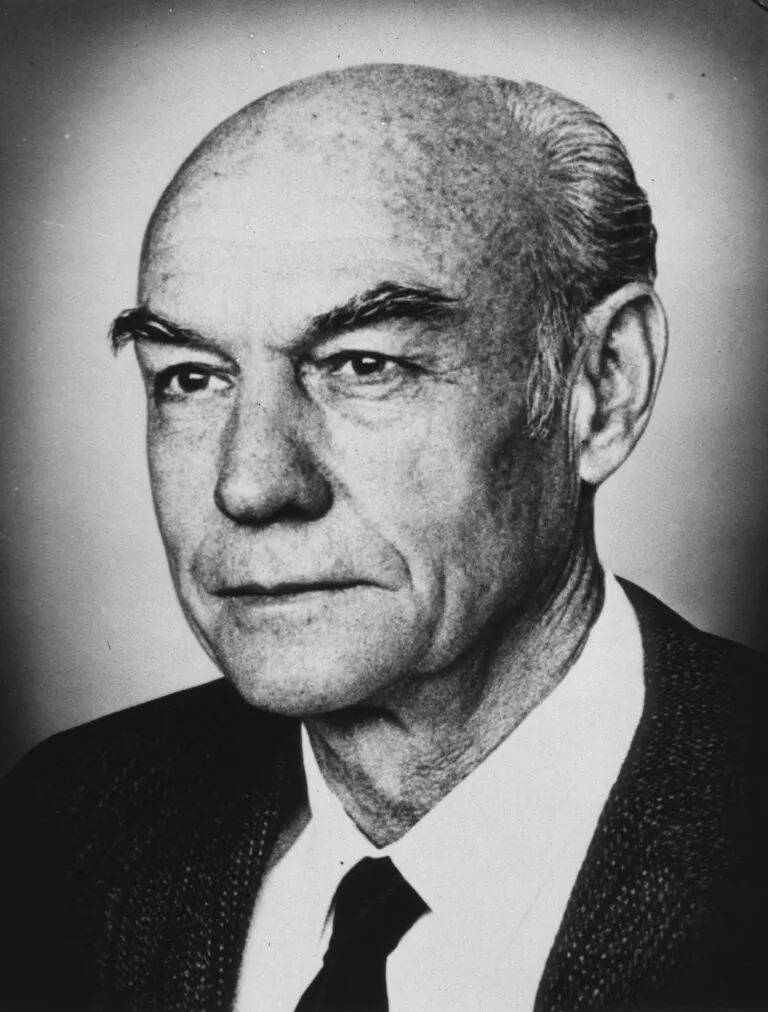 Photo: Roger Sperry, via ineurociencias.org
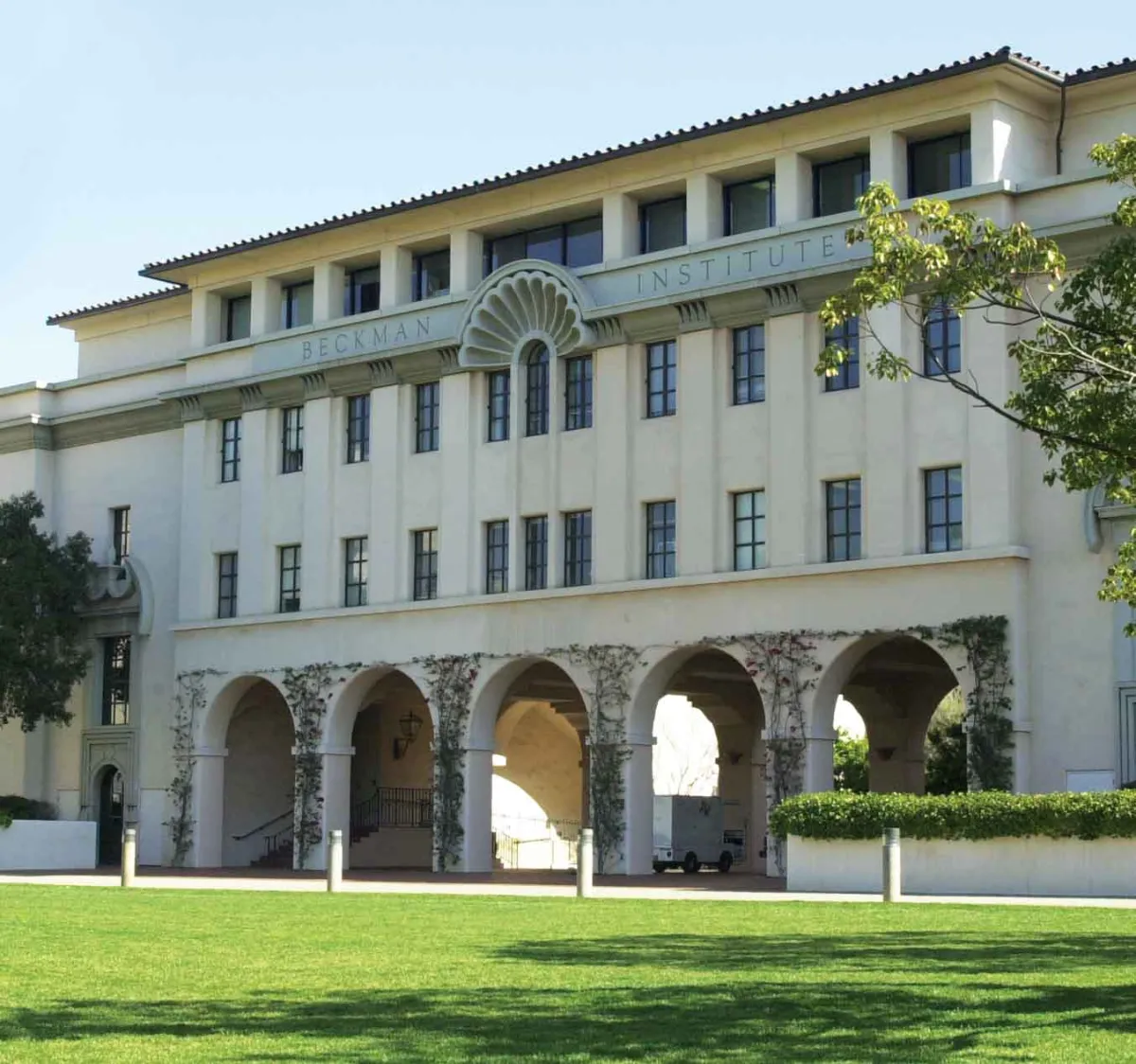 Photo: California Institute of Technology, via amgenscholars.com
These "split-brain" patients gave researchers a rare opportunity: they could present information to one hemisphere at a time and observe how each hemisphere responded independently.
What Sperry found was genuinely remarkable. The two hemispheres, when separated, showed different functional tendencies. The left hemisphere, in most right-handed people, was more strongly associated with language processing and sequential reasoning. The right hemisphere showed more involvement in spatial tasks and certain kinds of pattern recognition. When the hemispheres couldn't communicate, patients sometimes showed striking disconnects — the left hand, controlled by the right hemisphere, literally not knowing what the right hand was doing.
This was real, important science. It revealed that the two hemispheres are not identical in function, and it opened up decades of productive research into brain lateralization. Sperry received the Nobel Prize in Physiology or Medicine in 1981, and he deserved it.
But here's the crucial part that got lost in translation: Sperry's findings were about patients with a surgically severed corpus callosum — an extreme, artificially created condition. In a typical human brain, the two hemispheres are in constant, rapid communication across the corpus callosum, exchanging information billions of times per second. The clean separations Sperry observed in split-brain patients don't apply to intact brains doing everyday thinking.
How the Pop-Psychology Version Was Built
The leap from Sperry's lab findings to the "you're either a left-brain or right-brain person" framework didn't happen through more research. It happened through popularization.
In the 1970s and 1980s, as Sperry's work received increasing public attention, science journalists and popular authors began translating the findings for general audiences. The translation involved a lot of compression. "The left hemisphere shows stronger language lateralization" became "the left brain handles logic." "The right hemisphere shows more spatial processing" became "the right brain handles creativity." And the distinction between individual brain regions and whole-person personality types — a distinction Sperry's research never addressed — quietly disappeared.
Books like Drawing on the Right Side of the Brain (1979) by Betty Edwards brought the framework to a mass audience, and while Edwards was drawing on real ideas about visual perception, the broader cultural interpretation went much further. By the 1980s and 1990s, the left-brain/right-brain personality binary had been absorbed into management training programs, educational philosophy, self-help publishing, and corporate team-building workshops.
Personality assessment companies found it particularly useful. If you could tell someone they were a "right-brain creative" or a "left-brain analyst," you had given them an identity label that felt scientific — because it came with a Nobel Prize in the footnotes — but was actually flexible enough to fit almost any product or training program.
What Neuroscientists Say Now
Modern neuroimaging technology has allowed researchers to observe whole-brain activity during complex tasks in ways that simply weren't possible in Sperry's era. And what those studies consistently show is that virtually every cognitively demanding activity — solving a math problem, writing a story, making a decision, having an emotional reaction — involves coordinated activity across both hemispheres simultaneously.
A landmark 2013 study from the University of Utah analyzed brain scans from over 1,000 people and specifically looked for evidence of individuals showing stronger overall left-hemisphere or right-hemisphere network activity. They found no such pattern. People did not cluster into left-dominant or right-dominant groups. The brain, when it's working, uses both sides — and the degree of lateralization varies by specific task, not by personality type.
Neuroscientist and author David Eagleman has described the left-brain/right-brain personality framework as one of the most persistent neuromyths in popular culture — a case study in how a real scientific finding gets stretched into something the original researchers would find unrecognizable.
 Photo: David Eagleman, via play.cdnstream1.com
Sperry himself, in later interviews and writings, expressed discomfort with how broadly his findings were being applied. The leap from hemisphere function in surgically separated brains to personality classification in healthy people was not one he endorsed.
Why the Myth Survived This Long
The left-brain/right-brain framework has proven remarkably durable for a few reasons that have nothing to do with its scientific accuracy.
First, it offers people a flattering and forgiving explanation for their perceived strengths and weaknesses. If you're "right-brained," your disorganization isn't a habit you could change — it's just how your brain is wired. If you're "left-brained," your struggles with creative thinking aren't something practice could address. The framework removes agency, and for many people, that's a relief.
Second, it gives companies and consultants a simple tool for categorizing people — useful for selling assessments, training programs, and team-building exercises that would be harder to market if they acknowledged the full complexity of how brains actually work.
Third, the Nobel Prize connection gave the myth a layer of scientific armor that's been hard to penetrate. When someone says "this is based on Nobel Prize-winning brain research," most people don't dig into whether the popular version actually reflects what the research found.
The Actual Takeaway
Roger Sperry's research was real, rigorous, and genuinely important to our understanding of brain structure. What he discovered about hemisphere function in split-brain patients opened legitimate scientific doors that researchers are still walking through today.
What he did not discover — and what the science has never supported — is that your personality, your career aptitude, or your creative potential is determined by which hemisphere dominates your thinking. Your brain is using both sides right now, reading this sentence, and it will keep using both sides no matter which column a personality quiz puts you in.